Sizing
What Size Dumpster Do I Need? A Duluth, MN Guide
The 20 yard is one of our most popular sizes. How to choose between 10, 15, 20, 30 and 40 yards by volume, weight and driveway space around Duluth.
Guide · 9 min read
If you have never rented a dumpster, this is the page to read first. It covers the whole process from the phone call to the pickup, with the Duluth, WLSSD, Superior and Minnesota specifics that national guides leave out.
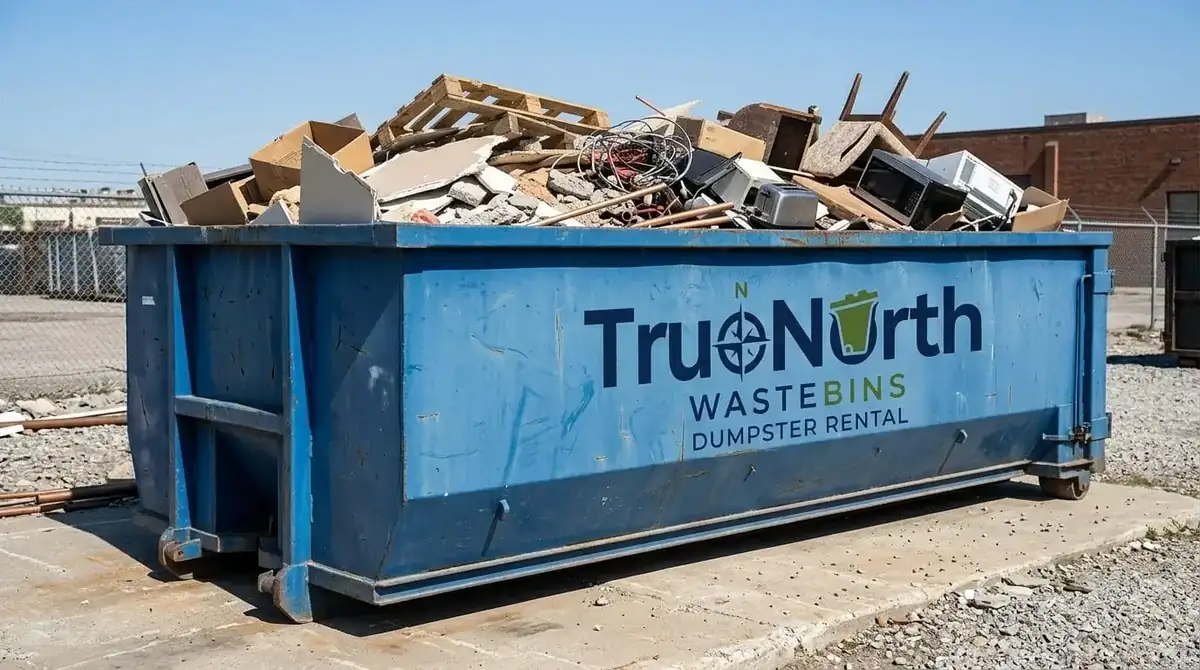
Whether you are remodeling a kitchen, clearing out a garage, replacing a roof, running a construction job or cleaning up after a storm, a roll-off puts all the debris in one place instead of trip after trip to a disposal site. The payoff is a cleaner, safer property, fewer runs and one flat-rate cleanup instead of a pile of small bills. In Duluth it matters more than you might think: we found no City bulky-item or yard-waste pickup, licensed haulers take a single bulky item only by advance arrangement (§ 24-2), and yard waste, tires and car batteries may not go out with collected trash (§ 24-17.1(a)). Across the bridge, Superior's City carts take what fits, and the City landfill does not take building materials. Remodels make more debris than people expect, and roof tear-offs, estate cleanouts, landscaping and demolition fill a box quicker than a trailer.
You call, tell us about the project and the address, and choose a size with our help. You get a flat-rate quote that typically includes delivery, pickup and disposal and the standard rental period of up to 7 days. We deliver to your home, business or job site, often the same or next day based on availability. You fill it with approved debris, keeping it level with the top rim, and when you are finished you call us and we pick it up. You do not need to be home for delivery or pickup, as long as we know where to place the dumpster and the area is clear of vehicles and obstacles.
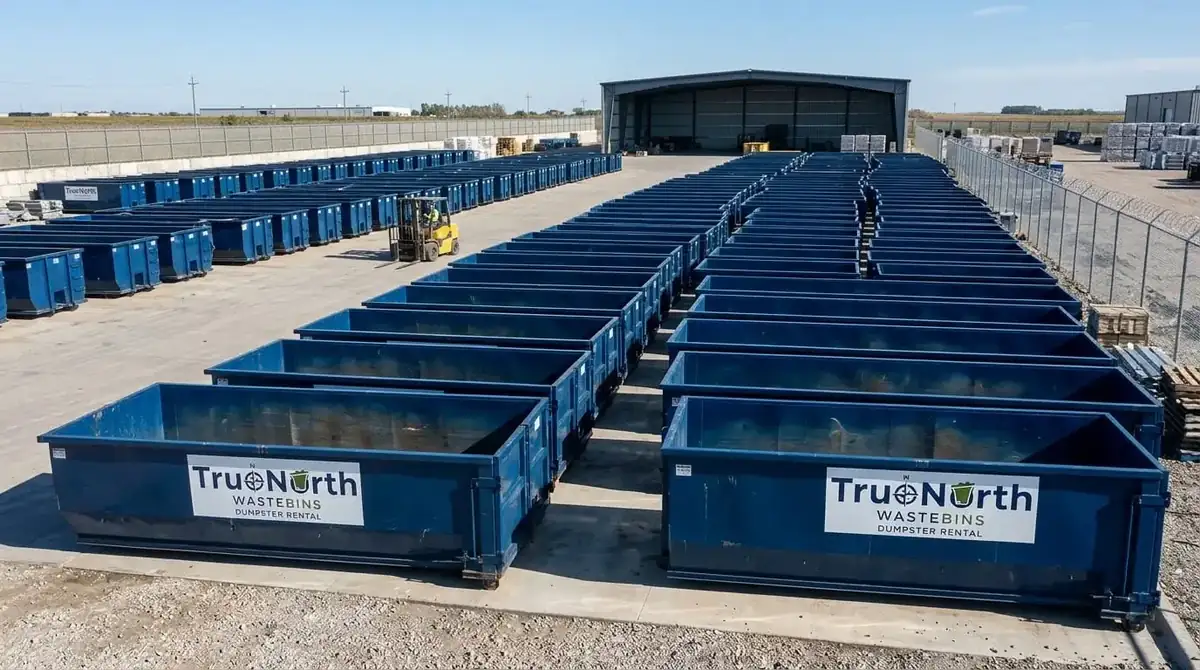
Our yard is at 405 John Ave in Superior, Wisconsin, inside the City of Superior and Douglas County according to the US Census geocoder, about 0.3 miles from the Blatnik Bridge (I-535 / US-53) and about 1.2 miles from the Bong Bridge (US-2) into Duluth. That puts us minutes from the bridges. Duluth had 86,697 people at the 2020 Census and St. Louis County 200,231; Superior had 26,751 and Douglas County 44,295.
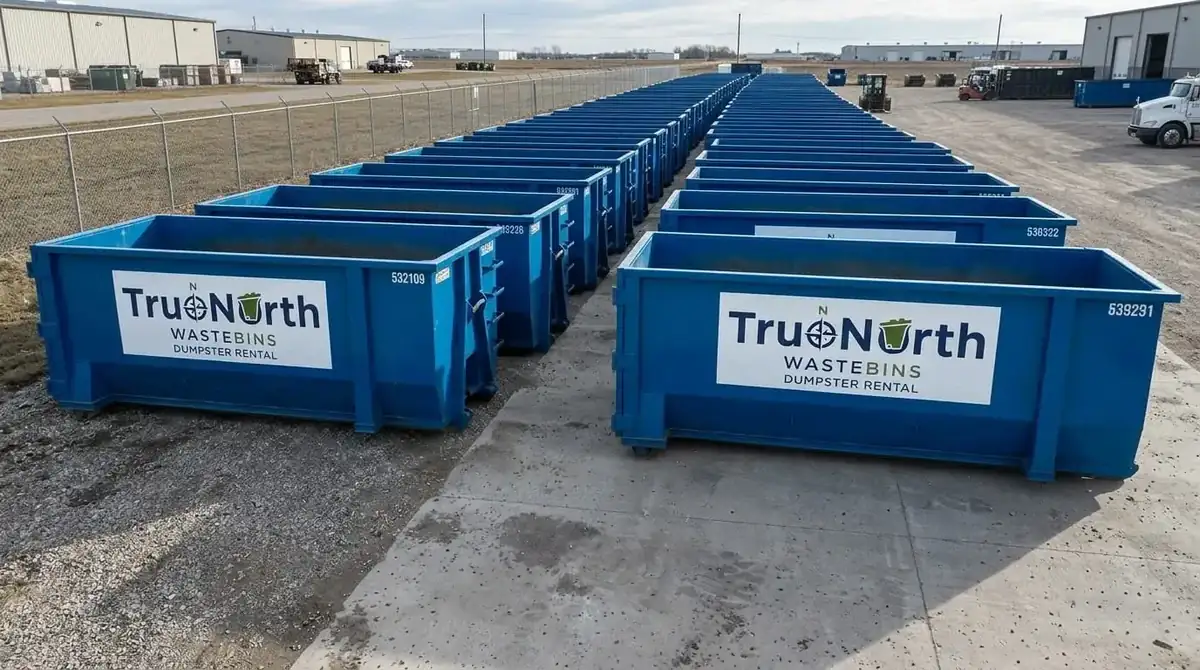
Start with the job, then check the weight. A 10 yard, about 14 feet long, suits small remodels, roofing and heavy material such as concrete and dirt. A 15, about 16 feet, suits garage cleanouts, flooring and yard debris. The 20, 30 and 40 share a footprint of about 22 feet and get taller: the 20 for renovations, roofing and landscaping, and one of our most popular sizes; the 30 for whole-home cleanouts and large remodels; the 40 for construction and demolition. All are about 7.5 feet wide. Weight allowances run from 1–2 tons on a 10 up to 5–6 tons on a 40, depending on material. The sizing guide has the full table.
Most of the area we serve sits inside the Western Lake Superior Sanitary District, which brands itself Resource Renew: a public district created by the Minnesota Legislature that oversees solid waste for Duluth, Hermantown, Proctor, Rice Lake, Cloquet, Carlton, Scanlon, Wrenshall and Thomson Township, which includes Esko. Its ordinance sets the separation rules, the hauler licence and the covered-load rule for the District. Inside Duluth, homes with four or fewer units must use a licensed collector (§ 24-17(a)), each hauler sets its own rates (§ 24-21), and we found no City franchise or organized collection.
Outside the District, St. Louis County runs solid waste for Floodwood under Ordinance 45, Carlton County licenses collectors in Moose Lake, Barnum and Cromwell under Ordinance 17 and runs the County Transfer Station in Carlton, and Lake County runs a demolition landfill on Bunker Hill Road in Two Harbors. Across the bridge, the City of Superior collects garbage from homes of one to four units itself, but large commercial and industrial properties of more than four carts a week are not eligible and arrange their own disposal (§ 58-11). That is why a roll-off is the usual answer for a remodel, a roof, a move-out or a construction site on either side of the bridges.
Driveway first. A Duluth street, alley or sidewalk spot needs a City Obstruction Permit from Engineering (§ 45-15), whose permit page names roll-off boxes; the City needs a $10,000 surety bond and liability insurance naming the City (§ 45-19), the permit card is posted at the box (§ 45-18), and barricades and warning devices follow the City Engineer's rules (§ 45-22). Road closures need 5 business days' notice. Duluth's zoning code names roll-off containers in its storage-container definition (UDC § 50-20.6.C), so we check placement rules with you before delivery. In Superior, the street needs a Director of Public Works permit (§§ 106-8, 106-4) and the sidewalk a City Clerk permit (§ 106-46). On state trunk highways such as I-35, US-53, MN-61, MN-194 and US-2, MnDOT has no container permit and obstructing a highway is a misdemeanor (Minn. Stat. 160.2715), so we never place there. In winter, snow emergencies and alternate-side parking work on the street, which is one more reason for the driveway. The permit guide covers every town.
Duluth requires a City licence for anyone in the business of collecting or removing solid waste or recyclables in the city (City Code § 24-9); vehicles and containers carrying solid waste must be leakproof and closed except while loading (§ 24-15(a)), and no collections are made in a residential district before 7 a.m. on Saturday or 6 a.m. on other days (§ 24-20(a)). The District says no one may collect or transport mixed municipal solid waste, rubbish or recyclables for profit inside WLSSD without a District licence (Ord. § 6.1), and its 2026–2028 application lists roll-off containers and construction and demolition waste.
Wrenshall and Barnum require a City Council licence or a city contract to haul refuse for hire, Silver Bay has a municipal garbage contract that offers dumpster rental, and Cloquet issues its own collector's licence; in those four we check the City's rules before booking. The permit guide has the detail. We're licensed & insured.
Minnesota keeps these out of the trash and the landfill: waste tires (Minn. Stat. 115A.904); major appliances such as fridges, washers, dryers, stoves, water heaters, air conditioners and dehumidifiers (115A.9561); TVs and monitors with a cathode-ray tube (115A.9565); lead-acid batteries (115A.915); motor oil, oil filters, antifreeze and other vehicle fluids (115A.916); yard waste (115A.931); mercury items such as thermostats and fluorescent tubes (115A.932); and rechargeable batteries and products with built-in rechargeables (115A.9157). In the Duluth area, the District's own banned list adds electronic waste, TVs and monitors 7 inches or larger, computers, VCRs, fax machines and cell phones, plus asbestos, household hazardous waste, infectious waste and medical sharps. That electronics ban is the District's local rule, not a state one.
For a roll-off that means yard waste goes as its own load, and electronics, tires, batteries and large appliances stay out of the box. Corrugated cardboard must be separated from trash in the District (§ 4.2.I), so flatten it and tell us when you book. Mattresses, furniture, shingles, drywall and wood are not on the state ban list, so a roofing load or a furniture cleanout is fine. If you are not sure where something belongs, call before you load it. The what-goes-in guide has the detail.
Minnesota requires certain items to come out before a renovation or demolition starts, and puts that duty on the owner, the person authorizing the work and the person doing it: household furniture, unattached carpet, bedding and mattresses, household hazardous waste such as paint and lawn chemicals, waste tires and major appliances, mercury thermostats and lamps, PCB ballasts, refrigerators and AC units, oils, lead-acid batteries and lead flashing, electronics, and asbestos that must be removed (Minn. R. 7035.0805 subps. 3 and 5). The MPCA says hazardous and problem wastes, including asbestos, must be removed from any structure before it is renovated or demolished, and asks for notice at least ten working days before work begins on regulated buildings, which in general means everything except residences of four dwelling units or less.
Asbestos work at or above the state thresholds needs an MDH-licensed contractor, who gives MDH written notice at least five calendar days before the project begins (Minn. Stat. 326.74); a domiciled owner of a single-family home is not required to hold a licence to do asbestos work in that home (326.72). Disposal is the hard line: Minnesota's definition of demolition debris says it "does not include asbestos wastes" (Minn. R. 7035.0300 subp. 30). Asbestos never goes in our roll-offs. In Duluth, debris from a wrecking permit must go to a site approved by the MPCA and WLSSD.
Inside the District, all solid waste collected must go to the appropriate facility licensed and permitted to accept that waste (WLSSD Ord. § 4.5.A), and every hauled load must be secured in covered, leak-proof vehicles or containers so it will not blow free (§ 4.5.B). Minnesota requires every load on a highway to be loaded or covered so nothing drops, sifts, leaks, blows or escapes (Minn. Stat. 169.81 subd. 5), and Wisconsin says the same (Wis. Stat. 348.10(2)). Keeping a clean demolition load apart from household junk matters, because the District says mixtures of demolition debris and other waste are not demolition debris (§ 2.1).
Whenever possible, we work with disposal and recycling facilities so materials such as metal, concrete, asphalt, cardboard and yard debris are diverted from landfills.
The rules change once you leave Duluth. Across the bridge is Superior, WI (pop. 26,751), home to our yard. Next door in the District are Hermantown (10,221; approx. 11 road miles), Proctor (3,120; 9) and Rice Lake (4,112; 13). In Carlton County are Esko (2,082, in Thomson Township; 17), Scanlon (987; 20), Cloquet (12,568; 23), Carlton (948; 22), Wrenshall (428; 23), Barnum (620; 38), Moose Lake (2,789; 44) and Cromwell (240; 43). Further out are Floodwood (517; 48) and, up the North Shore, Two Harbors (3,633; 32) and Silver Bay (1,857; 60). Populations are 2020 Census counts and miles are approx. road miles from our yard. See the service area, or the Duluth page for home.
In: wood, drywall, tile and flooring, cabinets and countertops, furniture, mattresses and household junk, roofing shingles and underlayment, remodeling and construction debris, small appliances, cardboard kept flat and together, yard waste as its own load, and concrete, dirt and brick within the weight limits of a smaller box. Out, by Minnesota law: tires, major appliances, CRT TVs and monitors, car batteries, rechargeable batteries, vehicle fluids and filters, mercury items, and yard waste mixed with trash; in the Duluth area, other TVs, monitors and computers too. Out of our boxes as well: paint, solvents and oils, fuel, hazardous chemicals, gas cylinders and propane tanks, medical waste, asbestos and appliances containing refrigerants unless properly prepared. The full guide says what to do with each instead.
Spread materials evenly, break bulky pieces down, and keep debris level with the top rim so the load can be safely transported; overfilled dumpsters cannot be legally transported. Keep the path clear for pickup, and in winter keep the approach plowed. Need more time? We can often extend your rental for a reasonable daily or weekly fee, or swap a full box for an empty one. Near homes we plan drop-offs and pickups for the daytime and do not promise night or Sunday service.
To book, call (218) 522-8487 — the phone is answered 24 hours a day, 7 days a week. Have the address, the material and a rough quantity ready, and call early for the best chance of same-day service. We accept major credit and debit cards, and payment is typically collected when your booking is confirmed to secure your delivery date.
From this guide
Most rentals include a standard rental period of up to 7 days, and your quote confirms the days. If you need more time, we can often extend your rental for a reasonable daily or weekly fee. Finish early and we can schedule pickup sooner.
We found no City bulky-item or construction pickup in Duluth. Homes use licensed haulers, a single bulky item goes only by advance arrangement with the hauler, and yard waste, tires and car batteries may not go out with the trash. A roll-off is the usual answer for a remodel.
No. As long as we know where to place the dumpster and the area is clear of vehicles and obstacles, you do not need to be there for delivery or pickup. Mark the spot clearly if that helps.
Yes. We cover Superior, Hermantown, Proctor, Rice Lake, Esko, Scanlon, Cloquet, Carlton, Wrenshall, Barnum, Moose Lake, Cromwell, Floodwood, Two Harbors and Silver Bay, with each town's rules on its own page.
Keep reading
The rest of the series, same approach — official sources, no filler.
Sizing
The 20 yard is one of our most popular sizes. How to choose between 10, 15, 20, 30 and 40 yards by volume, weight and driveway space around Duluth.
Permits
Driveway first: a Duluth street spot needs an Obstruction Permit, Superior needs a Public Works permit, and MnDOT has no container permit.
Cost
Duluth dumpster rentals often run $350 to $750. What a flat-rate quote covers, what moves it, and the drop-off and permit costs worth knowing.
Ready when you are
Call (218) 522-8487 with the address and what is going in. A quote and a delivery window before you hang up.
(218) 522-8487Open 24 hours, 7 days